


Business advisory
Financial visibility, forecasting, and operating discipline — run as one system.
Gravity works alongside management on a fixed cadence: clarify the numbers, name the constraints, set the priorities, and verify what actually changed.
The starting condition
Most companies do not have a numbers problem. They have a visibility problem.
The reporting exists. It arrives late, it disagrees with itself, and it describes a quarter that already happened. Decisions get made on instinct, and the plan cannot be defended to anyone outside the business.
The forecast is a guess
A spreadsheet built once, never rolled forward, and disconnected from cash.
Margin is unexplained
Revenue is understood; profitability by product, service, and customer is not.
Priorities drift
Everything is important, nothing is owned, and the quarter ends where it started.
The advisory system
Four disciplines, worked in order.
Financial visibility
Reporting management can rely on, current enough to act on.
- 13-week cash plan
- Margin analysis by product, service, and customer
- Pricing analysis
Forecast and scenarios
A forward view that survives contact with a lender, a buyer, or a bad quarter.
- Rolling forecast
- Scenario model with stated assumptions
- Cash-impact testing before commitments
Operating discipline
The management rhythm that turns analysis into executed work.
- KPI dashboard tied to business drivers
- 90-day priorities with named owners
- A standing review cadence with Gravity
Value and readiness
The work that widens options — for capital, for a transition, or for the next stage.
- Business-value and valuation-blocker review
- Documented capital case and use of funds
- Identified readiness gaps and the plan to close them



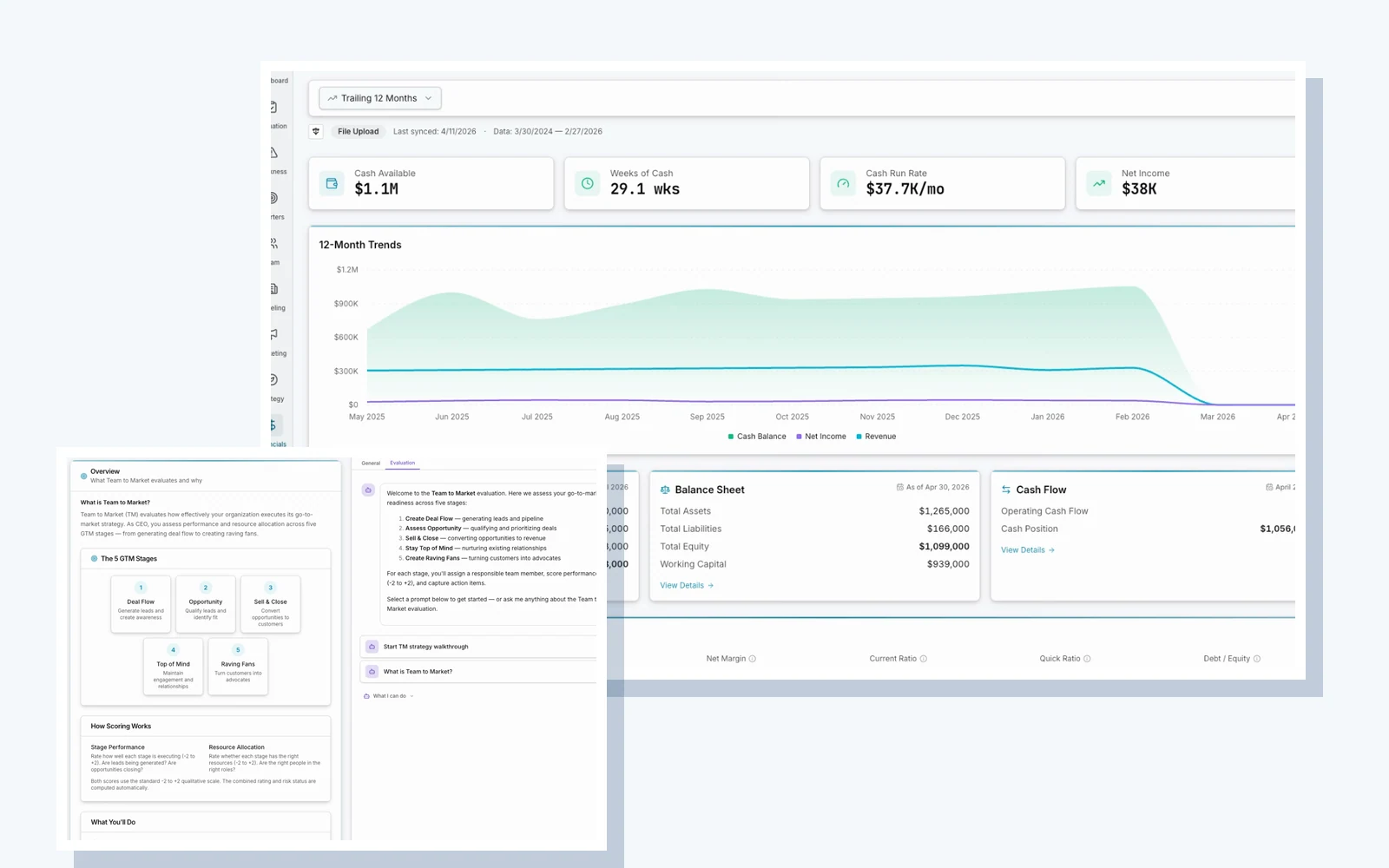
Proprietary, AI-powered Business Operating System
Between meetings, the numbers stay current.
Financial performance, cash position, forecast, drivers, and priorities live in one place. Management and Gravity look at the same view, so the meeting starts at the decision rather than at reconciliation.
The system carries the cadence. The adviser still does the judgment.
A short conversation
Not sure which discipline to start with?
Name the objective and we will reply by email with the appropriate next step — the discipline that usually moves first, and whether an application makes sense yet.
How an engagement runs
Identify. Address. Implement. Verify.
The same loop, every cycle — so improvement is demonstrable rather than asserted.
Identify
Establish the real financial picture and name the constraints holding the company back.
Address
Decide what changes, in what order, and what each change is expected to move.
Implement
Work it with management on a fixed cadence, with owners and dates.
Verify
Confirm the result in the numbers before the next priority is set.
Where it leads
A stronger business creates better options.
Advisory work is worth doing on its own terms. It also changes what is possible next: a company with reliable numbers, a defensible forecast, and evidence of execution is a company that can pursue capital, a transition, or an acquisition from a position of strength.

Fit
Who Gravity works with.
Established companies with real revenue, an owner or management team that wants to be measured, and a next stage that the current numbers cannot yet support.
Gravity accepts companies it believes it can materially help. If the fit is not there, we say so.
See if your business qualifies.
Apply to be evaluated. If the fit is there, the next step is a qualification call.
The application determines whether a company advances to a qualification call and, if qualified, the Gravity Capital Readiness Analysis.